
Profile
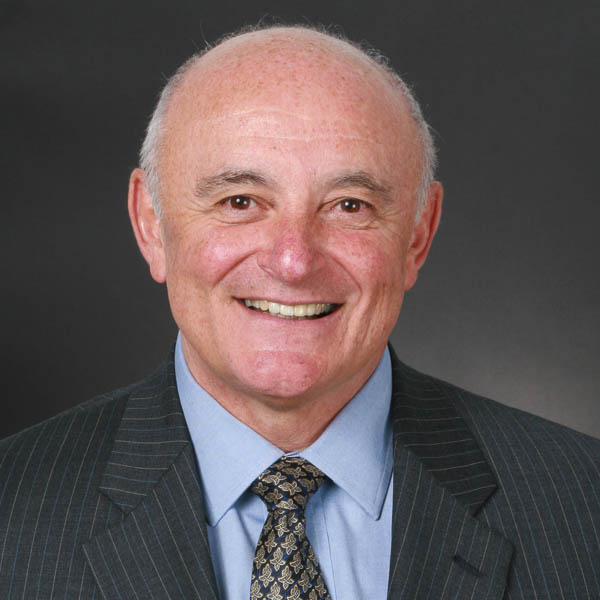
IN MEMORIAM: GINO L. DiVITO
TDR mourns the loss of TDR founding partner Gino L. DiVito (1937-2026). Information about his life and achievements is provided below:
Gino L. DiVito co-founded the Chicago law firm of Tabet DiVito & Rothstein LLC in February 2001. Since his retirement from the judiciary on August 1, 1997, he has concentrated in trial and appellate advocacy in all types of cases, primarily focusing on commercial and complex civil litigation. Licensed to practice law in Illinois since 1963, he has represented and opposed individuals and corporate, governmental and other entities, as both plaintiffs and defendants, in trial courts throughout the state, and in appeals in the Illinois Supreme Court, the Illinois Appellate Court, and the Seventh Circuit Court of Appeals. He has been named a Super Lawyer in the practice area of business litigation, and a Leading Lawyer in civil appellate law and in alternative dispute resolution.
Representative Experience
DiVito served as a judge for more than 20 years (May 1977 to July 1997). For the eight-year period from April 1989 to July 1997, he served as a justice of the Illinois Appellate Court. During that time, he served as the presiding justice of the First District’s Second Division, as a member of the court’s Executive Committee, and as the chairman of the court’s Computer and Information Committee. For the preceding 12-year period from May 1977 to March 1989, he served as a trial judge in the circuit court of Cook County, presiding over jury and bench trials and other court proceedings in both civil and criminal cases.
After his retirement from the bench and until he co-founded Tabet DiVito & Rothstein, he was a partner in the law firm then known as Quinlan & Crisham Ltd. (August 1997 to February 2001). Before his service as a judge, he served as a Cook County assistant State’s Attorney (December 1963 to May 1977), initiating the Felony Review Unit for the screening of felony cases (in February 1972) and participating as the lead attorney in more than a hundred felony jury trials. For the last three of those years (April 1974 to May 1977), he served as the chief of the Criminal Division, supervising more than 330 attorneys involved in every aspect of criminal prosecutions—from the screening of felony cases, through preliminary hearings and grand jury presentments, and through trial and the appellate process.
On his retirement from the bench in 1997, DiVito and other retired judges founded Judicial Dispute Resolution, Inc. (“JDR”), an alternate dispute resolution company, for which—in addition to his law practice—he provided mediation and arbitration services for many years. Now, concurrent with his primary focus on representing parties in trial and appellate courts, he serves as a mediator and an arbitrator in cases involving a wide range of subject areas, without current affiliation with any ADR company. He is certified as a mediator under Circuit Court of Cook County Local Rule 20 in the Law Division Major Case Court-Annexed Civil Mediation Program and, under Local Rule 21, in the Chancery Division Court-Annexed Mediation Program. From 1998 until 2009, he served as a member of the Board of Directors of the Association for Conflict Resolution–Chicago Chapter (“ACR-Chicago,” formerly known as the Society of Professionals in Dispute Resolution (“SPIDR”)). The Leading Lawyers Network has identified him as a Leading Lawyer in alternative dispute resolution in the areas of Commercial Litigation, Employment, Personal Injury, Commercial Real Estate, Construction, and Environmental Law.
He has provided expert opinion reports and deposition testimony in numerous cases. Subject matters include legal malpractice, the reasonableness of attorney fees, malicious prosecution, issues related to screening of felony cases and probable cause to arrest, and issues related to the probable cause hearing required by Gerstein v. Pugh, 420 U.S. 103 (1975). On June 4, 2003, after a lengthy investigation involving a review of thousands of pages in numerous documents and interviews of numerous witnesses conducted in conjunction with the FBI and the U.S. Attorney’s Office, DiVito, in his role as a special assistant State’s Attorney, issued a 176-page report concerning the arrests and prosecutions of the four men (commonly referred to as the “Ford Heights Four”), who were wrongly convicted of rape and the execution-style murders of an engaged couple in 1978. The report chronicles how four innocent men were convicted and imprisoned, with two of them receiving death sentences, as well as the evidence that proved that four other men committed the crimes.
Education, Professional Activities, and Recognition
DiVito graduated in 1955 from St. Ignatius College Prep, where he fulfilled the requirements for the classical honors curriculum, which included four years of Latin and two years of Homeric Greek. He attended Loyola University of Chicago, majoring in philosophy with a minor in Latin, and was accepted into law school before completing 11 elective degree hours. He received his Juris Doctor degree from Loyola University of Chicago School of Law in 1963. A student of the Jesuits for many years, he was taught to strive to be a man for others, to set the world on fire, and to always act for the greater glory of God, as illustrated in the Jesuits’ Latin motto of AMDG (Ad Maiorem Dei Gloria).
A member of Loyola’s adjunct faculty for more than 35 years, he held the faculty position of adjunct professor. For many years, he planned and taught each semester’s course in Advanced Trial Advocacy and assembled and supervised the other members of the faculty for that class. For 30 years (1982 – 2012) he also taught an annual weeklong course in trial advocacy at Willamette University College of Law in Salem, Oregon. Active throughout his service on the bench in planning courses and teaching a variety of subjects at the Judicial Conference and at the Appellate Judges Seminar, he has taught judges at the annual seminar for new Illinois judges (1986-2000) and at the National Judicial College in Reno, Nevada (1990-94). He also has taught lawyers for the National Institute of Trial Advocacy, the Illinois Institute for Continuing Legal Education, ALI-ABA, and the Court Practice Institute.
DiVito served, from 2008 until January 1, 2023, on the Special Supreme Court Committee on Illinois Evidence. The Committee’s proposals for the codification of rules of evidence for Illinois, officially designated as the “Illinois Rules of Evidence,” were approved by the Supreme Court on September 27, 2010, and became effective on January 1, 2011. He has lectured judges and lawyers on these evidence rules, and has authored a color-coded guide for the new rules, annually updated and accessible from his law firm’s website at www.tdrlaw.com, and available for purchase in book-form from the Illinois State Bar Association. He urges judges, lawyers, and law students to purchase his guide from ISBA, not only because he appreciates the royalties, but because ISBA does a great job of putting it in book form at a reasonable price, and printing it in color is immensely more expensive than the fee charged by ISBA.
He served (2003-10) as a member of the Special Supreme Court Committee to Study Rule 23. On the Committee’s recommendation, effective January 1, 2007, the Supreme Court vacated the administrative order it had entered on June 27, 1994, thus removing all limitations on the number of published opinions permitted in each appellate district, as well as the limitations that had been imposed on the length of published opinions and dissents. On September 13, 2010, the Supreme Court adopted the Committee’s recommendation to publish orders that previously had been unpublished under Supreme Court Rule 23. Since January 1, 2011, those orders have been published on the Supreme Court’s website, thus making them available for public review and since January 1, 2021, such orders entered on or after January 1, 2021 may be cited for persuasive purposes.
From 2000 through 2010, DiVito served as the chairman of former Illinois Supreme Court Chief Justice Thomas R. Fitzgerald’s screening committee to review and report on the qualifications of those considered for appointment to fill judicial vacancies on the appellate and circuit courts. In 2012, he served as the co-chairman of the Illinois State Bar Association Special Committee on Judicial Disqualification Standards, which recommended standards for judicial recusal based on campaign support that were adopted by ISBA’s Board of Governors and the Assembly and sent to the Illinois Supreme Court.
From December 2009 until February 2021, DiVito served as the inaugural chairman of the statutorily created Illinois Sentencing Policy Advisory Council (SPAC) (see 730 ILCS 5/5-8-8). The statutory purpose of SPAC is to “review sentencing policies and practices and examine how these practices and policies impact the criminal justice system as a whole in the State of Illinois.” 730 ILCS 5/5-8-8 (b). He served in that positon after having been appointed to SPAC by Governor Pat Quinn as his representative in December 2009 and after having been elected chairman by its members. In addition to his appointment by Governor Quinn on SPAC, he served as the representative of two subsequent governors. By virtue of his service as chairman of SPAC, he coordinated with two other state entities created by the Illinois Crime Reduction Act of 2009 (see 730 ILCS 190/1 et seq.): the Risks, Assets, and Needs Assessment Task Force (RANA) and the Adult Redeploy Illinois Oversight Board.
He is a member of the Illinois Judges Association, the Appellate Lawyers Association, the Seventh Circuit Bar Association, the American Bar Association, the Illinois State Bar Association, the Chicago Bar Association, the Women’s Bar Association of Illinois, the Justinian Society of Lawyers, and the Catholic Lawyers Guild of Chicago.
He has served as:
- the president of the Illinois Judges Association (1993-94),
- the president of the Appellate Lawyers Association (2002-03),
- the president of the Markey/Wigmore Inn of Court (1992-93),
- the chairman of the Illinois chapter of the American Judicature Society (1999-2002),
- a member of the Alumni Board of Governors of Loyola University of Chicago School of Law (2008-14).
He served as a member of the Illinois Supreme Court Committee on the Rules of Evidence (1975-79) (a predecessor of the current Supreme Court evidence committee) and as a member of the Illinois Supreme Court Planning and Oversight Committee for a Judicial Evaluation Program (1998-2006) which, pursuant to Supreme Court Rule 58, was charged with implementing and administering a program for judicial performance evaluation. Effective March 1, 2011, the Supreme Court amended Rule 58, renaming the Committee the “Judicial Performance Evaluation Committee,” and authorized it to implement and monitor a program of mandatory judicial performance evaluation, “for the purpose of achieving excellence in the performance of individual judges and the improvement of the judiciary as a whole.” Rule 58(c). Since 2011, he has served as a facilitator in implementing evaluations required by the Rule.
DiVito also has served as a member of the governing Boards of the Illinois Judges Association (for many years and at various times), the Illinois Judges Foundation (2007-18), the Chicago Bar Association (1993-95), the Illinois State Bar Association (1984-90), the Chicago Bar Foundation (1994-95), the Appellate Lawyers Association (1997-2004), the Lawyers’ Assistance Program (1996-98), and the John Howard Association (1997-2001).
For approximately 25 years, he authored and annually updated a guide related to sentencing under Illinois law. He provided free annual updated editions of the guide to Illinois judges, state’s attorneys, public defenders, and law school professors, and to the Illinois State Bar Association for its marketing to other members of the Bar. In August 2010, LexisNexis Matthew Bender began publishing and marketing the guide, entitled Illinois Sentencing and Disposition Guide, 663 pages in length in its seventh edition, and co-authored by Peter G. Baroni.
With former Governor James R. Thompson, he co-chaired the Criminal Law Edit, Alignment and Reform (CLEAR) Commission which, after two years of deliberations, submitted to the Illinois General Assembly significant legislative revisions to the Criminal Code of 1961 (720 ILCS 5/1-1 et seq.) as well as to the Unified Code of Corrections (730 ILCS 5/1-1-1 et seq.). All of CLEAR’s suggested amendments were approved by the General Assembly by unanimous or near-unanimous vote, and all were signed into law by the Governor, comprising 12 separate public acts. As an indication of the significance of these legislative amendments, by virtue of Public Act 97-1108, effective January 1, 2013, the Criminal Code of 1961 was re-named the Criminal Code of 2012.
DiVito is a frequent speaker and author on a variety of topics related to trial and appellate advocacy and issues of concern to judges and the justice system. A sampling of his articles are accessible on his firm’s website:
- New Limits on Subject Matter Waiver of Attorney-Client Privilege, 101 Ill. B.J. 348 (July 2013).
- Surviving the Death of Oral Argument, 99 Ill. B.J. 188 (April 2011).
- Judicial Selection in Illinois: A Third Way, 98 Ill. B.J. 624 (December 2010).
- Remembering Harold, Illinois State Bar Association’s Bench & Bar Newsletter (May 2010).
- Remembering Tom Fitz, Illinois State Bar Association’s Bench & Bar Newsletter (December 2015).
In addition to his books on evidence and sentencing, he is a co-author of the fifth and sixth editions of the pocket-sized Illinois Evidence with Objections and Responses, which is published by the National Institute for Trial Advocacy (NITA). These more-than 250-page editions provide the Illinois Rules of Evidence, and incorporate the codified evidence rules for framing objections and responses.
In May 2013, DiVito delivered the commencement address to the graduating class of Loyola University of Chicago School of Law, and was awarded the honorary degree of Doctor of Laws. Also in 2013, he was admitted into the Class of Distinguished Counselors, and was additionally honored by being chosen to give the response on behalf of the new members. In 2016, the Illinois Judges Foundation awarded him its Judicial Icon Award, and in 2011 it named him its honored guest at its Spring Reception and presented him its Award of Appreciation. In 2011, the Illinois State Bar Association’s Academy of Illinois Lawyers inducted DiVito into its Class of Laureates. Also in 2011, Treatment Alternatives for Safe Communities (TASC) honored him with its Justice Leadership Award. At its gala dinner in 2008, the Illinois Bar Foundation honored him with its Distinguished Award for Excellence. In 1995, Loyola University of Chicago School of Law awarded him the Loyola Medal of Excellence, and in 2007 it honored him with its Distinguished Jurist Award. In 1997, St. Ignatius College Prep presented him its Award of Excellence in the Field of Law. Also in 1997, he received the Justinian Society of Lawyers Award of Excellence. The Illinois Judges Association honored him with its Lifetime Achievement Award (2002), its Harold Sullivan Award (2012), and its Presidential Service Award (2016). In both 2013 and 2000, he received the Illinois State Bar Association’s Board of Governors’ Award and, in 1999, its Virgil E. Tipton, Jr. Publications Award. The eldest of four children of Italian immigrants, in 2005 he received the Leonardo da Vinci Award for Excellence in Jurisprudence from the Order Sons of Italy in America. He has received numerous other awards and certificates of appreciation.
DiVito and his wife of more-than-50 years reside in Glenview, Illinois, where he served for 14 years on the Board of Fire and Police Commissioners, retiring as its chairman in 2016. His wife, who knows him better than anyone, nonetheless loves him. Though he has made many decisions as a judge and a lawyer, marrying her was the best decision he ever made. A retired teacher, she has taught him most of what he knows of love and about navigating through life. He and his wife are the parents of three near-perfect daughters, a lawyer, a nurse-practitioner, and a physician and the grandparents of eight perfect grandchildren.